Home / Finding solutions / All about yield loss
Correlation between particle contamination and yield loss
Particle contamination is a significant and well-documented cause of yield loss in semiconductor fabrication, composite aerospace manufacturing, and superconducting accelerator components.
The particles involved are often microscopic, and they can enter the process from people, equipment, materials, and the environment.
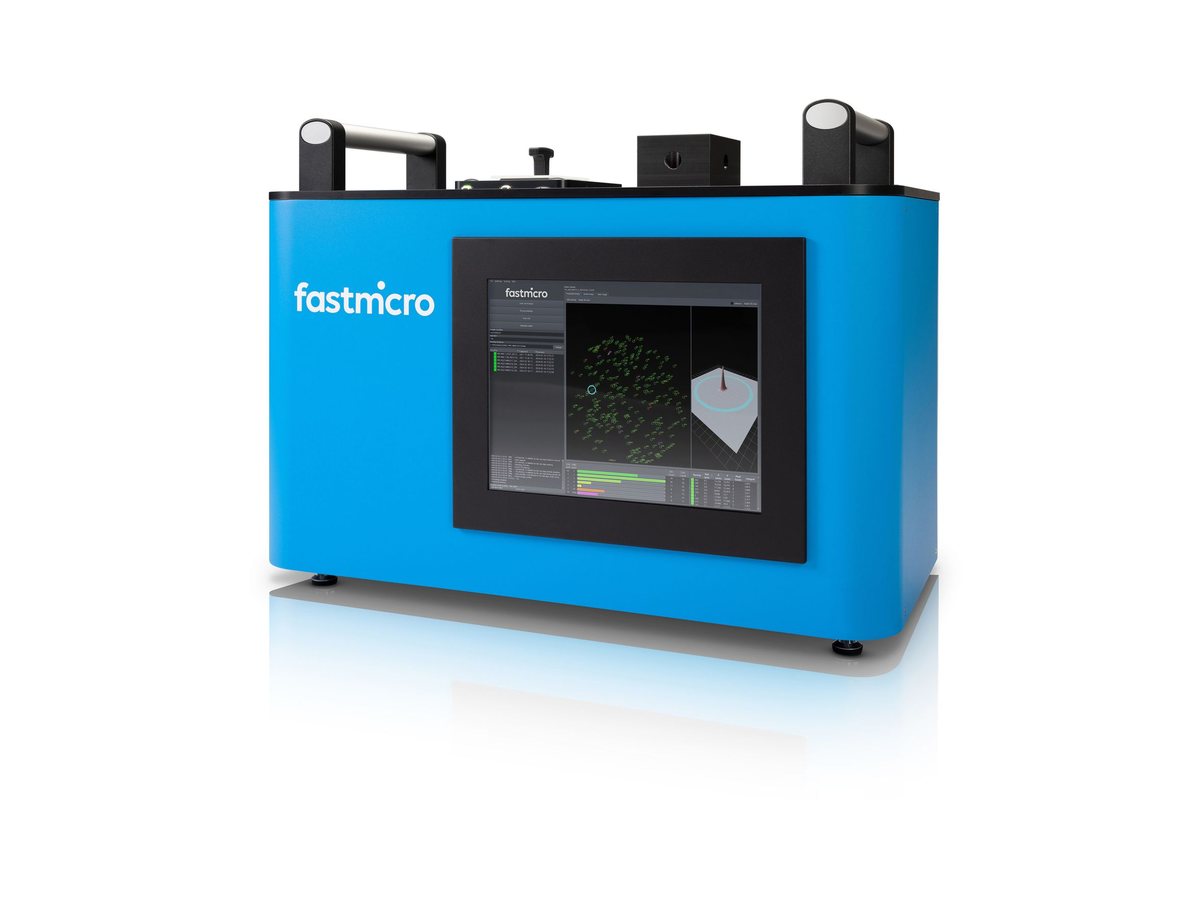
Wherever sub-micron particles put yield, reliability or safety at risk, Fastmicro makes contamination measurable.
The impact of surface particle contamination
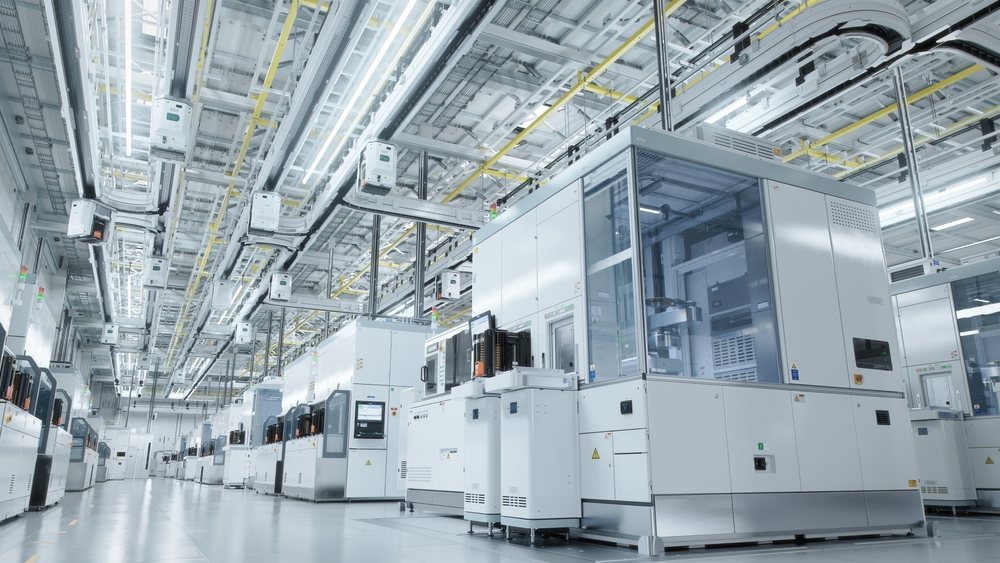
Semiconductor fabrication
Yield is everything
A single particle landing on a wafer during lithography or deposition can block a circuit line, create a short, or distort a pattern. At advanced nodes, where features are measured in nanometers, a 50 nm particle can destroy an entire die.
This is why fabs invest heavily in ISO-class cleanrooms, advanced filtration, and surface cleanliness standards such as ISO 14644-9. Despite these controls, particle-induced defects remain a leading cause of scrap and rework, directly impacting cost per wafer and time-to-market.
Aerospace manufacturing
Reliability and safety
Contamination on optical sensors, propulsion components, or hydraulic systems can lead to premature wear, signal distortion, or catastrophic failure. Debris in fuel system valves can cause flow instability, while particles on satellite optics degrade imaging performance.
Because aerospace components often operate in extreme environments, even minor contamination can propagate into major yield losses during assembly, testing, or qualification.
Big-science facilities
Mission-critical performance
In particle accelerators, fusion experiments, and space telescopes, vacuum chambers require ultra-clean surfaces to maintain pressure stability, optical instruments demand pristine coatings, and superconducting systems can quench due to particulate interference.
When experiments cost millions per day to operate, a single contamination event can delay research timelines and inflate operational costs.
From detection to monitoring
Leading organizations treat surface cleanliness as a measurable, controlled parameter rather than an assumption. They set cleanliness specifications, measure surfaces at critical steps and track trends over time.
This makes it possible to find contamination sources, confirm that cleaning works and act before defects reach the product.
Prevention at the source
Cleanroom airflow design, low-shedding materials, controlled garments and disciplined handling reduce how many particles are generated and how many land on surfaces.
Protection during handling and transport
Sealed carriers, protective covers and clean packaging keep critical surfaces protected between process steps.
Effective cleaning
Precision wet cleaning, CO₂ snow cleaning and plasma cleaning remove particles without damaging sensitive surfaces. Choosing the right method for each part and particle type is essential.
Surface cleanliness measurement
Direct, quantitative measurement of particles on surfaces replaces assumptions with data, shows whether cleaning works and makes cleanliness specifications enforceable.
Monitoring and trend analysis
Measuring regularly at critical points in the process, together with statistical process control, catches contamination drift early and helps trace it back to its source.
Organizations that combine these measures get fewer defects, less rework and downtime, and higher, more stable yields.
Contamination control then becomes a predictable, preventive process instead of reactive troubleshooting.
Related content

We make breakthroughs in cleanliness control happen.
Are you ready to level up? Request a demo.